FORMANT SCULPTING RESONATOR
From the era of early polysynths
POLYRESONATOR
WELL-KNOWN FORMANT SCULPTING RESONATOR FROM THE ERA OF EARLY POLYSYNTHS
Resonance as a tonal sculptor is a spectral shaping — decades before the term became common. The resonator emphasized carefully chosen bands, creating vowel-like formants, animated timbres, and shimmering harmonic structures that felt almost acoustic.
– Formant Resonator Architecture
– Engine Circuit Modes
– Creative Filter Modes
Update 1.0.5 info
– Performance improvements (Improved CPU usage).
$29
Oscillators generated sound. Filters shaped it. Amplifiers controlled it. But..
But one instrument dared to go beyond traditional synthesis architecture — the Polymoog™. In the early days of electronic music, most synthesizers followed a predictable path VCO-VCF-VCA & Envelopes.
Instead of merely filtering sound, it introduced something far more expressive: Resonance as a tonal sculptor. It was spectral shaping — decades before the term became common. The resonator emphasized carefully chosen bands, creating vowel-like formants, animated timbres, and shimmering harmonic structures that felt almost acoustic. This is the kind of processor that makes musicians stop and ask: “What is creating that sound?”
Really, what is creating that sound?
Shape resonance — shape emotion!
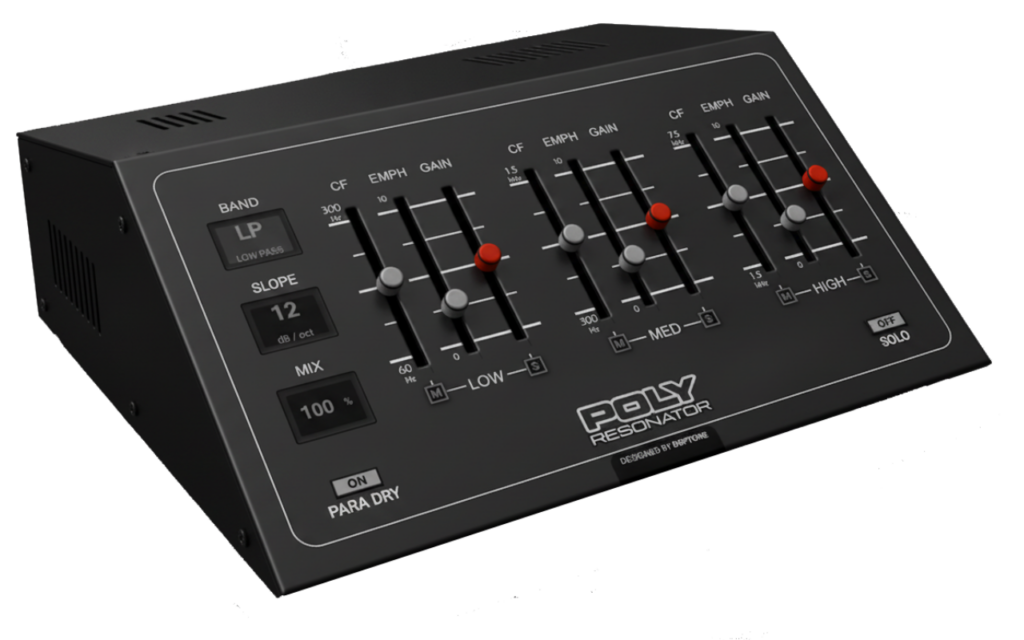
POLYRESONATOR - is not a strict replica — it is a respectful evolution.
It introduces modern control, gain staging, and tonal engines designed for contemporary production workflows. At its heart lies a simple idea of shaping resonance
Stop EQ’ing. Start Sculpting Sound
Instead of simply cutting or boosting frequencies, builds musical resonances inside your audio, transforming flat sounds into rich, animated textures.
Make drums punch harder. Give bass physical weight. Turn synths into choirs. Push leads forward without harsh EQ. All in seconds.
POLYRESONATOR lives in the space between an EQ, a filter bank, and a harmonic enhancer.
Which means it solves problems most plugins can’t.
Use it when a sound feels:
– lifeless
– too clean
– buried in the mix
– lacking emotion
– missing character
When multiple resonant filters interact
sound stops behaving like raw audio… and starts behaving like an instrument
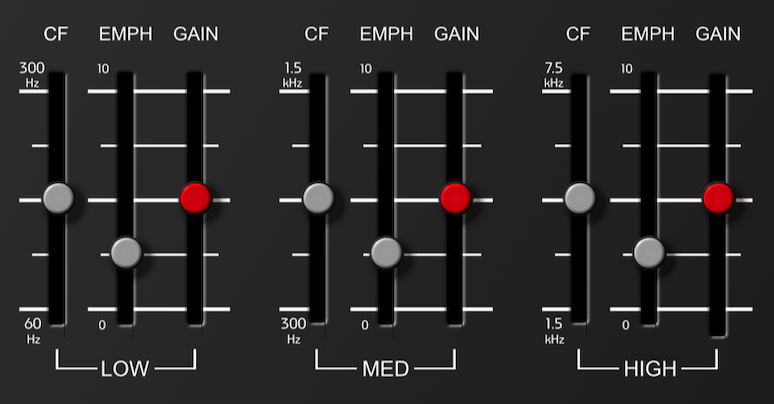
With three parallel bands
Multiple filter modes, selectable saturation engines, and tuned internal headroom, POLYRESONATOR lets you explore territory that sits between filtering, formant synthesis, and harmonic enhancement.
Device invites you to step outside traditional synthesis and processing workflows. It is not about removing frequencies. It is about revealing hidden tone. Whether used subtly to enhance musicality or pushed into experimental territory, it offers a rare combination of vintage philosophy and modern flexibility. Sometimes the most inspiring sounds come not from building something new, but from letting resonance bring it to life.
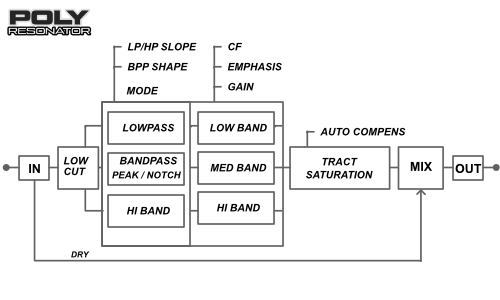
Formant Resonator Architecture
Three overlapping bands allow you to sculpt vocal-like
tonal peaks and organic harmonic structures that
traditional filters cannot achieve.
Engine Circuit Modes
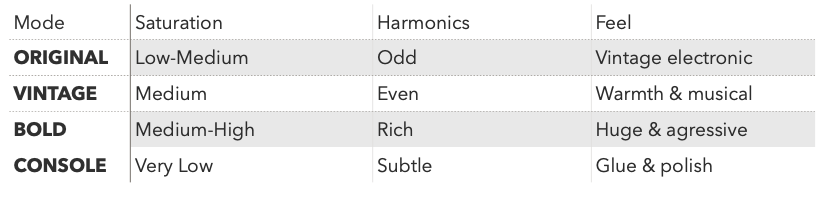
Switch between carefully tuned saturation behaviors:
- Original: fast, articulate, vintage solid-state character
- Vintage: warmer response with smoother highs
- Bold: dense and harmonically rich
- Console: subtle preamp-style coloration

ORIGINAL MODE
Based on original resonator diode scheme. Clear, energetic response. Fast, articulate, vintage solid-state character
Early resonator curcuit: sligtly non-linear, firm, and controlled rather than warm. Fast clipping response, Strong odd harmonics, Slight compression of peaks, Keeps transients relatively tight, Prevents resonant bands from exploding in level. Formant-focused, Mechanical / robotic edge, Great note articulation.
Good for:
– Emulating classic electronic textures
– Making pads sound like vintage machines
– Kraftwerk-style tonal shaping
– Tight bass resonances
– Sequenced synth lines
Wants the true resonator philosophy? This is the default mode.
VINTAGE MODE
Based on tube amplification scheme. Smooth and warm. Warmer response with smoother highs
Tube-style saturation introduces gentle nonlinearities that make the resonator feel less like a filter bank and more like a vibrating acoustic object.
Softer clipping curve, Strong even harmonics, Natural micro-compression, Slight transient rounding, Perceived loudness increase without harshness. Perception: Smooth, Expensive, Analog, Emotional, “Record-ready”.
Best to use for: Pads, Strings, Poly synths, Electric piano, Guitar, Vocals. This is often the most musical mode.
BOLD MODE
Based on tube amplification scheme. Smooth and warm. Warmer response with smoother highs
Valve-style saturation behaves more dramatically than tube — it adds weight and authority, making the resonator sound bigger than the source. Higher saturation ceiling, Strong harmonic bloom, Noticeable density increase, Controlled but audible breakup when pushed, Enhances low-mid energy.
Perception: Huge, Cinematic, Modern analog, Powerful.
Best to use: Mono synth leads, Bass, Drums, Industrial textures, Techno sound design. “Sound suddenly enormous?” — what can be said about BOLD mode
CONSOLE MODE
A secondary line that supports or expands on the title
Preamp-style console saturation. This mode is more about gluing the resonator bands into one instrument.
Extremely subtle harmonic enhancement, Micro compression, Phase cohesion across bands, Slight high-frequency smoothing.
Perception: Professional, Controlled, Hi-fi, Expensive mix bus.
Best to use for: Full mixes, Drum buses, Stereo synth layers, Parallel processing, Master FX chains. When the resonator feels too “separated” or clinical, try to use Console
Choosing right engine
Selects the internal saturation circuit
Original architecture is Diode-based engine. But now you have options to change character of the whole resonator effect, in different colors for you needs
More filter modes
Move beyond standard filtering
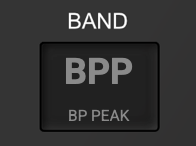
– LP & HP: for tonal shaping
– BPP (Peak): for resonant emphasis
– BPN (Notch): for spectral carving
Transform the processor from a gentle enhancer into a powerful sound design tool.
HOW TO USE
Move beyond original filtering options
SLOPE (HP, LP): Choose between 6 dB for gentle shaping or 12 dB for stronger filtering.
SHAPE (BPP): Allowing for sharper or more pronounced resonant boosts

Pre High-Pass (LowCut) filter
emoves excessive low frequencies before the signal enters the resonator bands. This improves clarity, prevents low-end distortion, and allows the resonant bands to react more musically.
Lower settings retain weight and body, while higher settings emphasize articulation and formant detail.
BANDS CONTROL
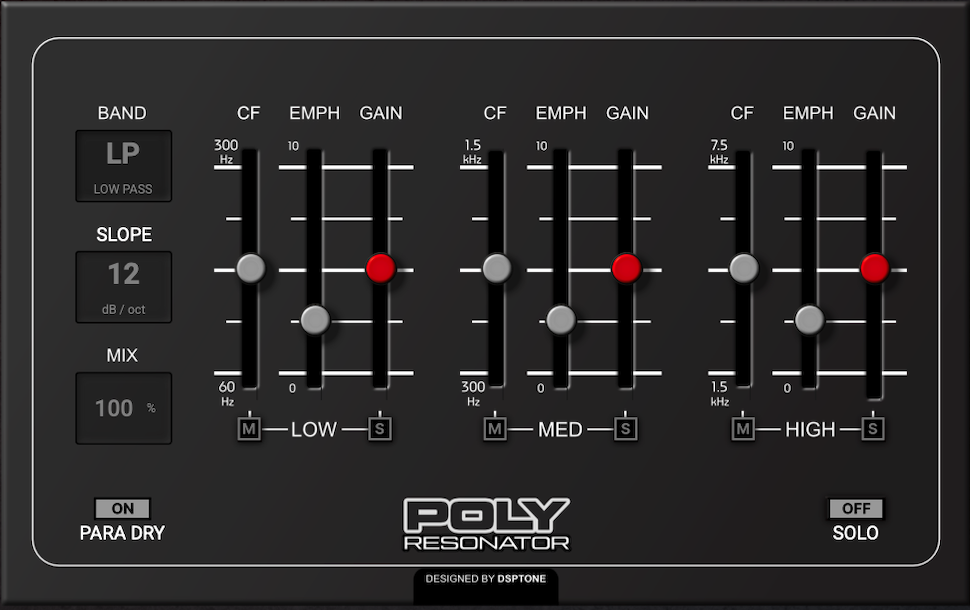
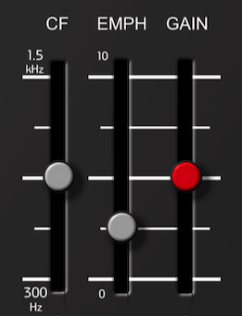
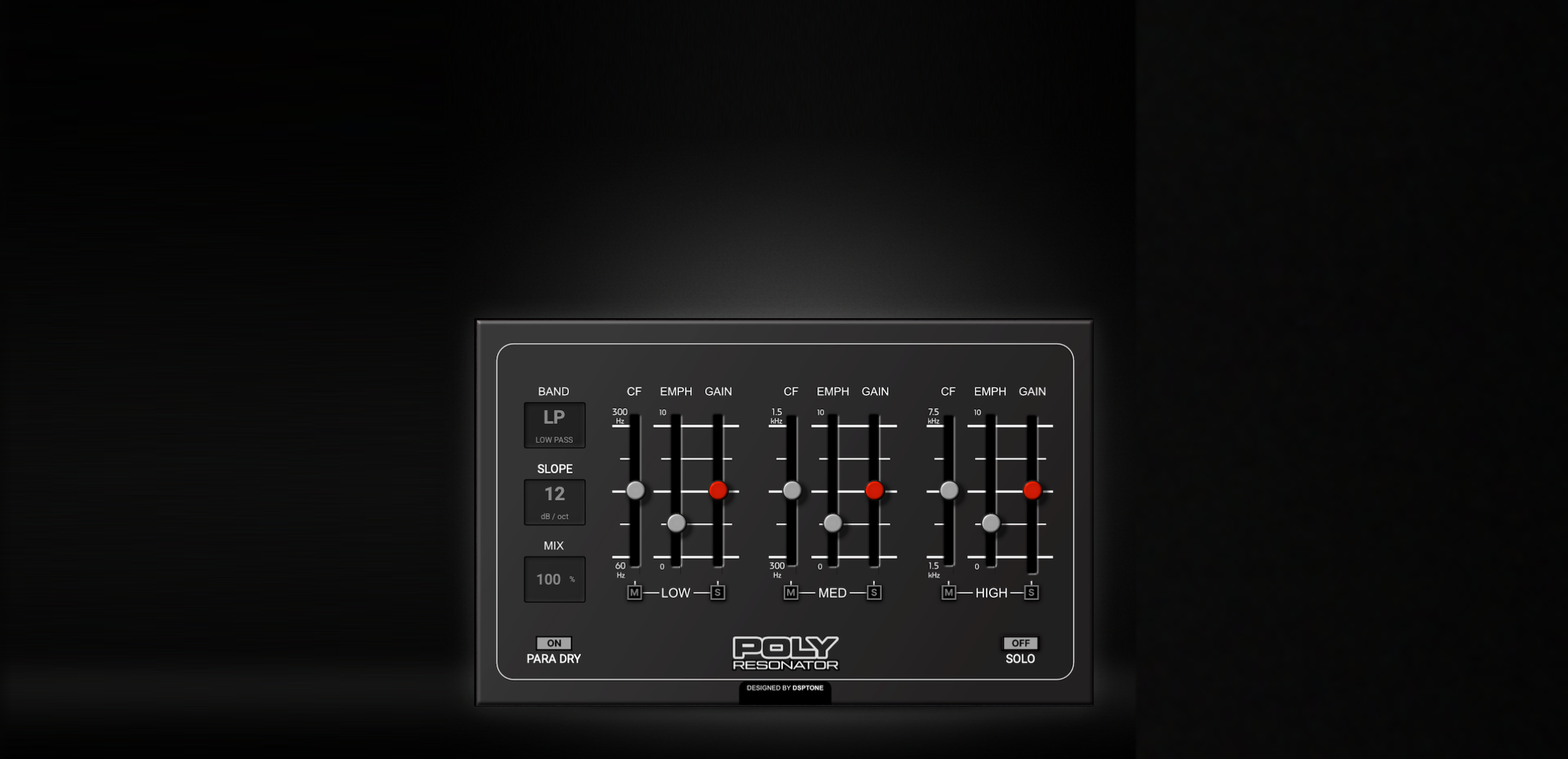
Low, Med & High bands have three main controls
– CF: Center Frequency. Selects the frequency focus of each resonant band in own ranges:
– Low band: 60-300 Hz
– Med band: 300 Hz – 1.5 kHz
– High band: 1.5 – 7.5 kHz
– EMPHASIS: Controls band resonance intensity. Higher values narrow the band and enhance formant character.
– GAIN: Adjusts the contribution of each band within the summed signal. Main resonator effect functional is reducing the band gain to cut signal. But you can also increase gain for any band for own needs.
HOW TO USE
Over time, producers discovered it could: simulate vocal articulations, create ensemble richness, push synths forward in dense arrangements, add dimension without obvious effects.
– Raise one band’s Emphasis.
– Sweep the CF (Center Frequency) slowly. You will immediately hear the sound “speak.”
– Add a second band for complexity.
– Adjust Gain to balance energy.
– Select an Engine to shape harmonic density.
– Blend with Mix for parallel processing.
– Small moves often produce the most musical results.
Who used unique Resonator?
Many artists certainly used the Polymoog™ and its unique Resonator section extensively within their music, shaping the sound of the internal synth voices.
It’s a sonic character as a core part of their sound design. Extracting and re-engineering this complex analog circuit to accept external audio signals and function reliably as a standalone unit was been a significant undertaking, and likely not commercially viable given the niche market and the availability of simpler, more versatile standalone filters.
But some hardware brands already make Resonators as standalone effect processor. And we present to you Resonators as unique FX-design tool.
– Gary Numan*: cold, metallic, and often haunting sounds were central to his early work on albums like “The Pleasure Principle” (1979).
– Tony Banks (Genesis)*: Banks was a big fan and used it for unique textures and pads, often blending it with other synths on tracks from albums like “Duke” (1980) and “Abacab” (1981), contributing to lush, sometimes metallic-sounding pads and strings.
– Rush (Geddy Lee)*: used Resonators effect to add layers on pads to synth-heavy sound in the late 70s and early 80s.
– Patrick Moraz (Yes)*: create complex and dynamic soundscapes with Resonators sections, like at “Permanent Waves” (1980) and “Moving Pictures” (1981). The resonator would have contributed to the character of the string and pad sounds.
– Kraftwerk*: contributing to their signature robotic and electronic soundscapes. They layered many sounds, but it would have added to the overall texture of albums from the late 70s/early 80s.
* ™: All product names, artists and bands names, trademarks and registered trademarks are the property of their respective owners. All company, product, bands and service names used are for identification purposes only. Use of these names, trademarks and brands – does not imply endorsement!
TIPS & CREATIVE TECHNIQUES
CREATE VOCAL TEXTURE
Boost the MID band with moderate emphasis and sweep between 600–900 Hz for vowel-like articulation.
ANIMATE STATIC SYNTH
Use low emphasis on multiple bands rather than pushing one aggressively. Overlap creates movement without modulation.
TUNE YOUR DRUMS
Focus the HI band around 2–4 kHz to add pitch-like presence to snares and percussion.
ADD ANALOG WEIGHT
Switch to Vintage or Console engines and drive gently for subtle harmonic thickening.
PARALLEL MAGIC
Set Mix between 30–60% to enhance tone while preserving the original transient detail.
LEGEND OF THE ELECTRONIC SOUND
At the early era of Polyphonic Analog synthesis
POLYRESONATOR / $29
USE FOR INSTRUMENTS PROCESSING
– Pads & Strings
– Analog-style polysynhts
– Electric pianos
– Guitars
– Drum Buses
– Sound design layers
– Vocals
™: All product names, artists and bands names, trademarks and registered trademarks are the property of their respective owners. All company, product, bands and service names used are for identification purposes only. Use of these names, trademarks and brands does not imply endorsement

64 bits support
Mac Intel / Apple Silicon
Windows 10
Frequently Asked Questions / F.A.Q:
VST3, AU & AAX formats, 64-bits only
* AAX is a trademark and software of Avid Technology. Audio Units is a trademark and software of Apple Inc. VST3 is a trademark and software of Steinberg Media Technologies GmbH.
Ableton Live 11+ / Mac & PC: AU & VST3
Bigwig 4+ / Mac & PC: AU & VST3
Cubase 13+ / Mac & PC: VST3
Digital Performer 11+ / Mac & PC: AU & VST3
FL Studio 23+ / Mac & PC: AU & VST3
GarageBand 10+ / Mac: AU
Logic Pro 10+ / Mac: AU
ProTools 12+ / Mac & PC: AAX
Presonus / Fender Studio One 5+ / Mac & PC: AU & VST3
Reaper 6+ / Mac & PC: VST3
Reason10+ / Mac & PC: VST3 / (Reason Rack: VST3)
Cakewalk Next / PC: VST3
Cakewalk Sonar – VST3
..and many more. If your DAW is suport AU, AAX & VST3 formats, they must work.
| Mac | Windows |
| 64-bits only Intel & Apple Silicon, Mac OS X 10.15 or higher | OS: 64-bits only Windows 10 or higher |
| RAM: 4Gb minimum, 16 recommended | RAM: 4Gb minimum, 16 recommended |
| Disk space: 200Mb free drive space | Disk space: 200Mb free drive space |
Just write to us about problem or any ideas to us: [email protected]
We provides separate installers for macOS and Windows. Launch the installer for your operating system and follow the steps. All selected plugin formats install automatically to their standard locations.
Windows — VST3 (64-bit), AAX
– VST3 installs to: C:\Program Files\Common Files\VST3
– VST3 installs to: C:\Program Files\Common Files\VST3
macOS — AU, VST3 (64-bit), AAX
– AU installs to: /Library/Audio/Plug-Ins/Components
VST3 installs to: /Library/Audio/Plug-Ins/VST3
AAX installs to: /Library/Application Support/Avid/Audio/Plug-Ins
Every license includes 3 activations. You can run the plugin on up to three systems simultaneously. No hardware dongle is required.
The activation window appears automatically the first time you launch the plugin. You can also reopen it later through the License button inside the plugin.
1. Open the activation window.
2. Click Activate your plugin
3. Click Let’s Go!
4. Your browser opens the Audioloom activation page.
5. Sign in with your Audioloom account.
6. The plugin activates automatically.
Use this method on systems without internet access.
Step 1 — Inside the plugin, click Activate your plugin. Select Offline Activation and click Generate Machine File. This creates a machine-specific activation request file.
Step 2 — Transfer the file to a machine with internet access. Open your browser, go to audioloom.com/activate, and drag the machine file onto the page. A license file for your offline machine will be generated.
Step 3 — Transfer the license file back to your offline machine. Activate by dragging the file onto the activation window.
Offline activations are permanent Once an offline activation is used, it is permanently bound to that machine. It cannot be revoked or transferred. Use online activation whenever possible to keep your activation slots flexible.
Online activations can be deactivated at any time, freeing up a slot for another machine. You can deactivate directly inside the plugin or via your account on the Audioloom website.
To deactivate inside the plugin:
1. Open the plugin.
2. Open the license information panel.
3. Click Deactivate.
To deactivate via the website:
1. Log in to your Audioloom account.
2. Navigate to your licenses.
3. In the Activations column, click Manage.
4. Select the active machine and click Revoke.
Offline activations cannot be deactivated If you activated offline, that activation slot is permanently assigned to that machine. Plan your offline activations carefully before proceeding.
Updates Free
Free for lifetime
DAW Support
All main DAWs
Downloads
Links to downlod